


Travel guide
Northeast Sardinia with kids: which beaches, and how to make it easy
 Davide Sanseverino
Northeast Sardinia is a good place to bring young children. The difference between an easy beach day and a hard one is how you plan around age, season and wind.
- Sardinia for families
- Family beaches
- Northeast Sardinia
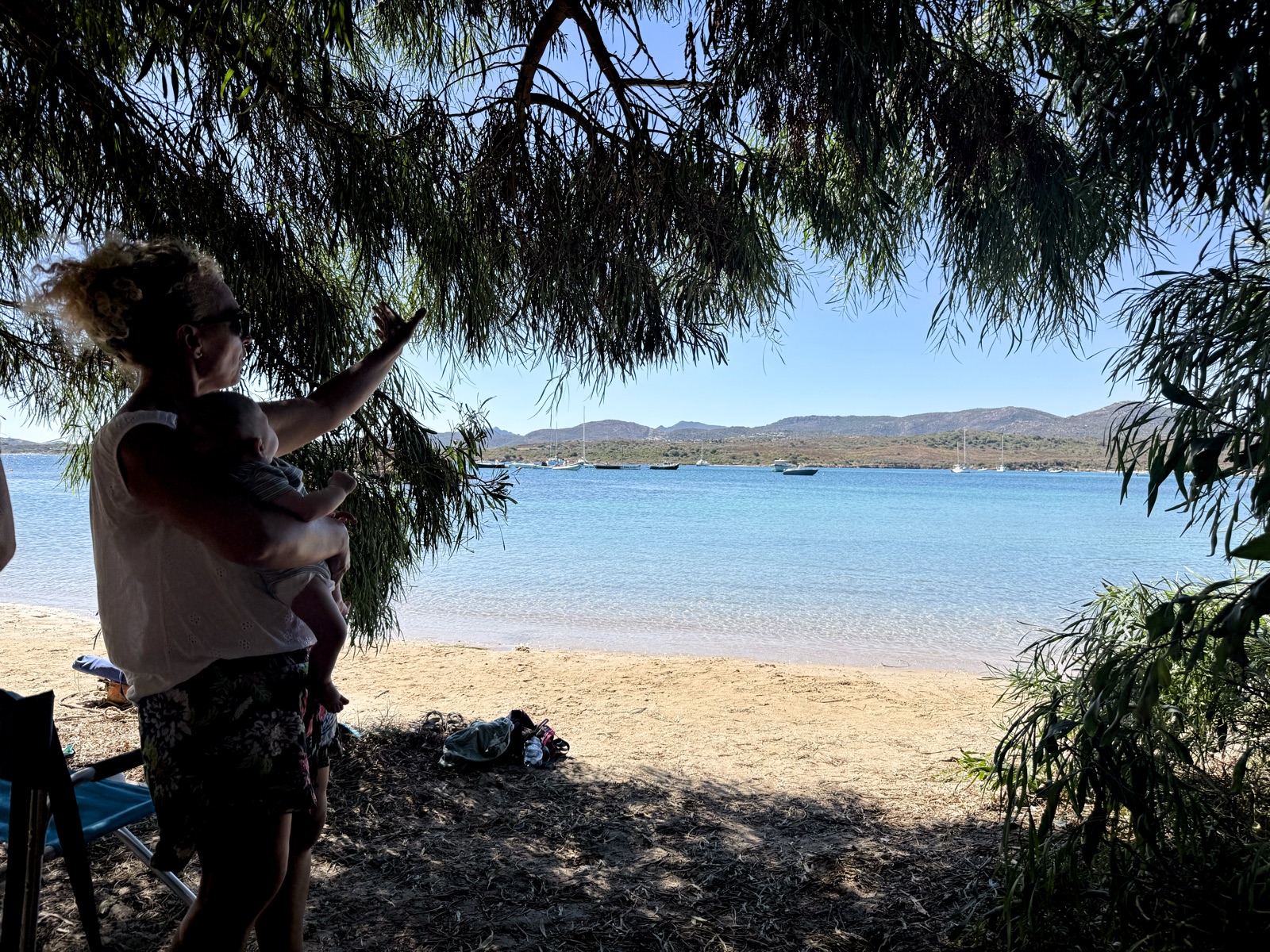
Northeast Sardinia is a good place to bring young children. The sea is shallow and clear, the sand is soft. But the difference between an easy day and a hard one isn't the beach. It's how you plan around three things: the age of your kids, the month you come, and the wind that morning.
This is the honest version. Not the prettiest beaches, the easiest ones.
For a day-by-day route beyond the beach, read our northeast Sardinia itinerary.
Start with the age of your kids
The age of your kids sets how long you can realistically stay. An infant or a toddler will not last all day on a beach, and planning as if they will is how the day falls apart.
With very young kids, go in the morning, roughly 8 to 11, or come back in the evening from 5 to 7 for the sunset swim. In July and August, avoid 11 to 4 completely. It's too hot, and there's nowhere to hide from it.
The younger the child, the more you want a low-key, sandy beach over a famous one. Easier to park, easier to find space, easier to keep eyes on them in the water.
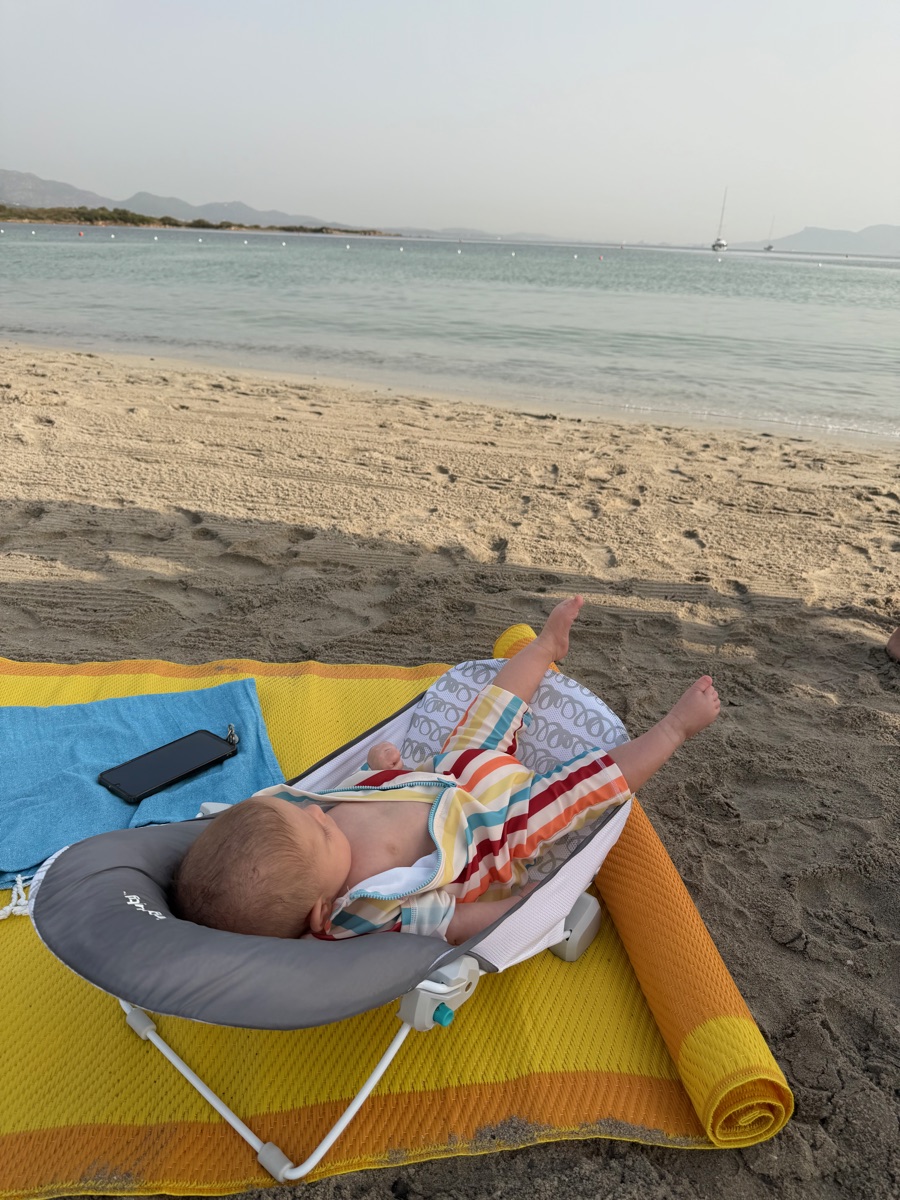
Check the wind before you pick the beach
This is the habit that makes the biggest difference. Wake up, look at the wind map, then decide where to go.
When the maestrale blows from the northwest, some beaches turn unpleasant fast: sand in everything, chop on the water. Others stay sheltered and calm. Knowing which is which is the whole game. Find out more about the local beaches and how the wind works in our Murta Maria beaches guide.
The famous beaches, and when to skip them
La Pelosa near Stintino, Cala Brandinchi and its neighbour Lu Impostu look like paradise, and they're worth seeing once. But they're complicated. All three cap numbers now, so you need to book or pay for entry and parking in advance, and in summer they're packed. Beautiful, not a relaxed day with a toddler.
La Cinta at San Teodoro and Porto Taverna have gorgeous water, but they've filled up, with music and a young crowd. Great if that's your scene, less so for a quiet day with an infant.
For an easy family day, pick the quieter, sandy beaches instead. The Murta Maria beaches guide has the calmer ones and where the wind sits.
When to come
The shoulder season is the sweet spot for families: April, May, June, September, October. The weather is warm, usually warmer than the rest of Europe, around 25 degrees, with the odd bit of rain. The beaches are open and calm before the summer crowds arrive with their rows of umbrellas and their noise.
In April and May the water is still cool, but with an infant you can find a sheltered spot to paddle. Porto Istana is a good example, and it's at its best before the season fills it up.
Weekends in July and August are the hardest of all. If you come then, weekdays are easier.
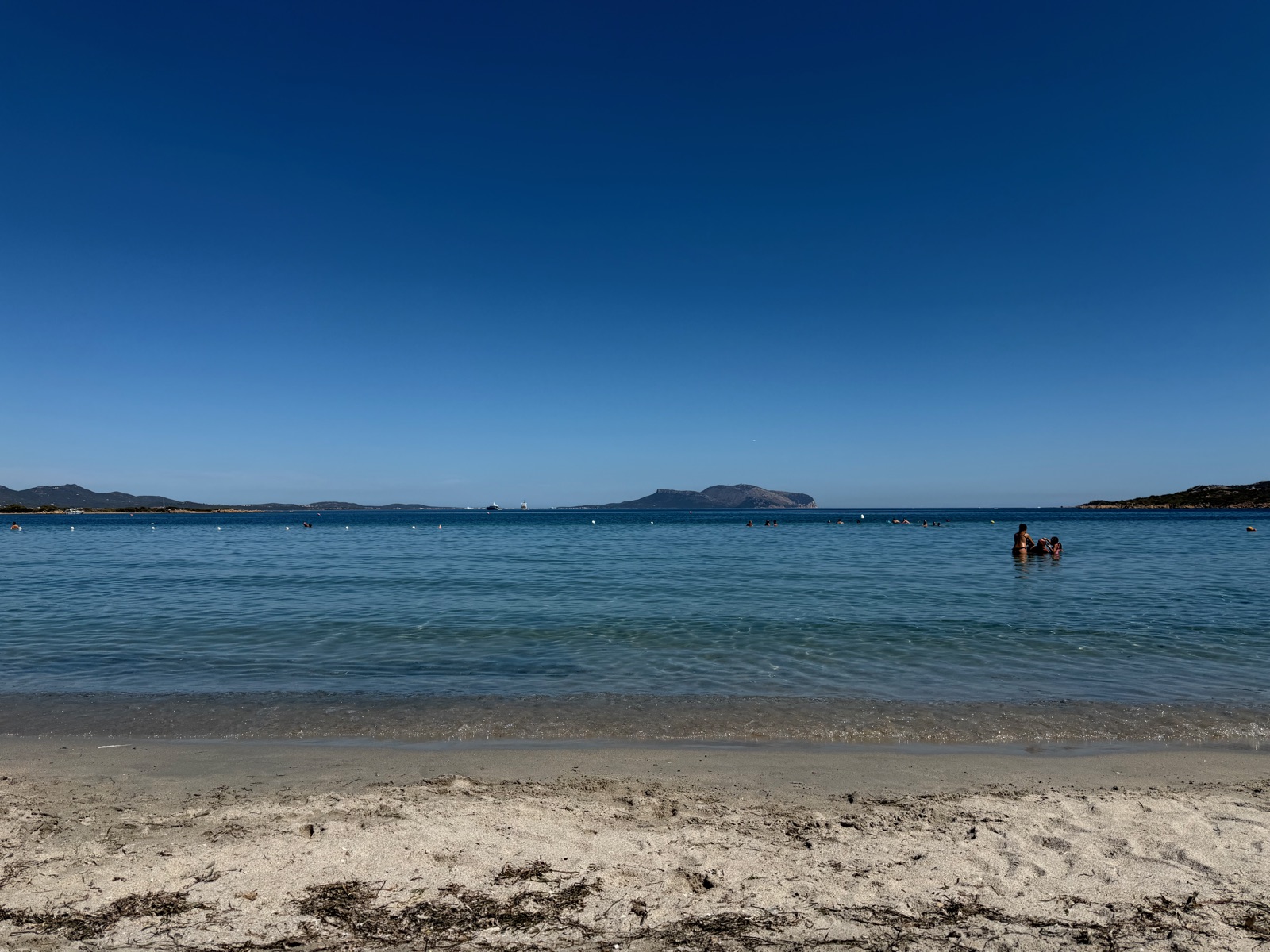
Shade, and the tent trap
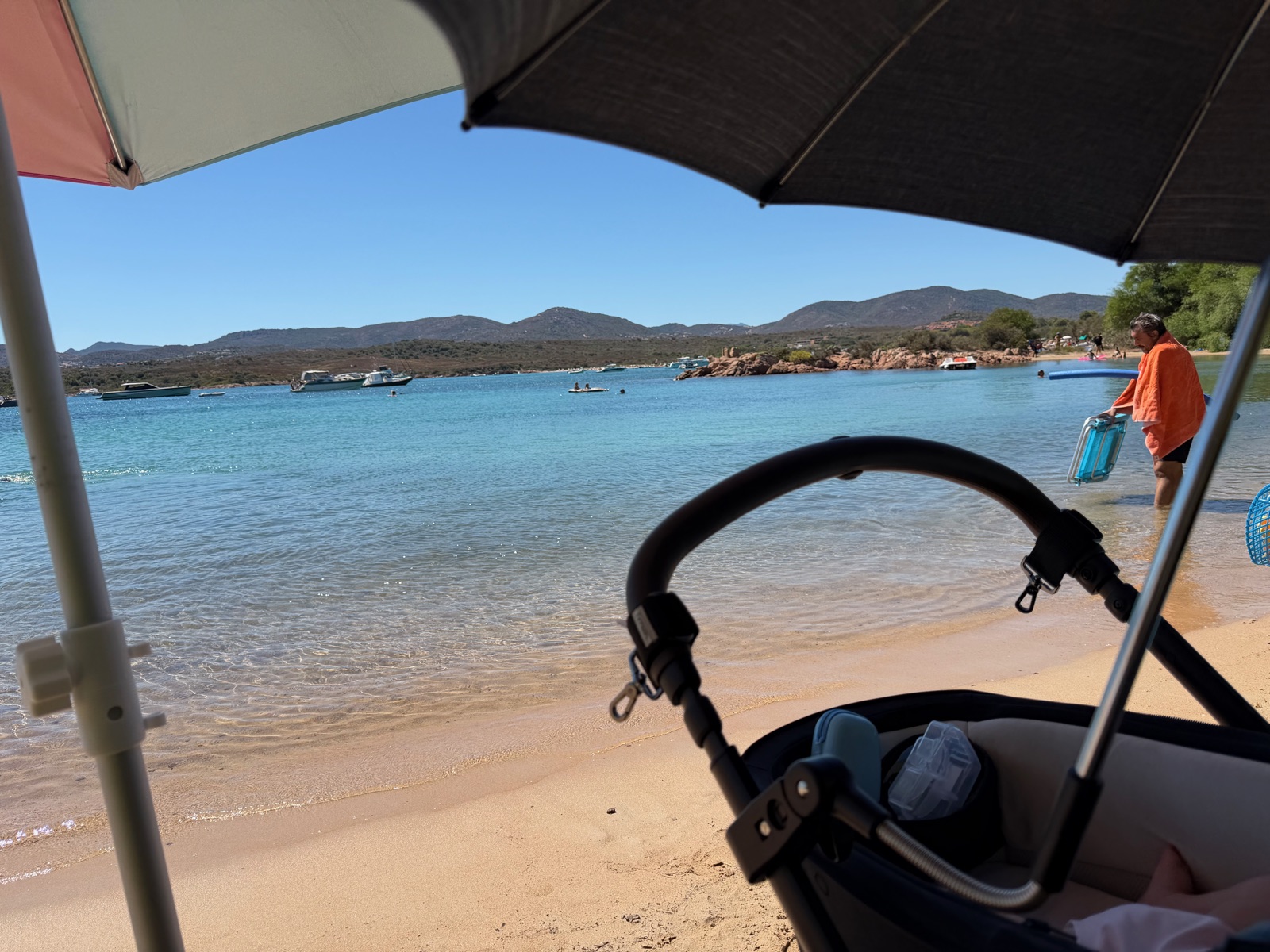
Most of these beaches have little natural shade, so you bring your own. One warning: large canvas beach tents are banned on some beaches. People use them anyway, but checks do happen, and you can be told to take it down and left with no shelter at all.
Our tip for a small infant: take two umbrellas and set them side by side. It gives you more covered space than one, and it's always allowed.
How to get set up on the beach
Most of the good family beaches have little shade and few services, so how you get set up matters. Three ways to do it.
Bring your own. Best with an infant, because you control the shade, the cool box and the food.
Rent it there. A sunbed and umbrella spot starts around 50 euros a day, and front row or the top beaches can be 70 or more. Over a week that adds up fast, 350 to 500. Worth knowing before you go.
See if your accommodation provides it. Some places lend the gear. At Su Bisu, for example, or if you're staying at Villa Luce, we put together a little beach trolley: a couple of chairs, a cool box and an umbrella. It folds into the boot, you drag it to the beach, then pack it up and take it home. Guests use it for free, we just ask that you bring it back in one piece.
Food and water
With a baby, a cool box is not optional. Milk and bottles turn warm fast in the heat, so pack one and bring your own supplies, especially for any special requirement. Don't count on finding it there.
Check whether the beach is serviced before you go, some have a bar, some have nothing. It also depends how long you're staying. For a couple of hours a cool box is enough. If you're making a half day of it, stop on the way and pick up extra food for the grown-ups.
Getting there and parking
You need a car here, and parking at the good beaches is mostly paid. Arrive early and it's easier on both counts. A useful move with a full car: drop the family and the gear at the beach first, then one person parks and walks back, often five minutes.
Your own pushchair and car seat
We travelled with the pushchair, not the car seat, but there's a trick worth knowing. Many airlines let you check two pieces of baby gear, and a pushchair and a car seat count as two. Pack them into one large padded bag, fold everything in at the gate, leave it by the aircraft door, and collect it at the bulky items desk the other side. Airlines tend to be relaxed about baby gear. If you'd rather not carry it, rent a car seat with the hire car, around 15 euros a day.
Take the pushchair onto the beach if you want, we did. Rinse the wheels when you get back. And before you fly home, give the whole thing a proper rinse, top to bottom, not just the parts that touched sand. The salt in the sea air gets into the bolts and corrodes them, and you won't see it happening, especially on a windy trip. A minute with fresh water saves it.
Where you stay makes or breaks it
With an infant or a toddler, nap times and sleep routines run the day. A small villa gives you the freedom to work around them: your own kitchen, your own space, somewhere quiet for the nap while the day resets. And you're close to restaurants where you can take small children easily, a pizza or a plate of pasta, which anywhere in Italy keeps everyone happy.
That's the case for a villa near the quiet beaches over a hotel room. It's what Su Bisu is set up for.
A simple routine that works
Wake up. Check the wind map. See where it's sheltered. Then choose the beach. Morning or evening for the little ones, the middle of the day back at the villa, out of the heat. It sounds basic. It's exactly what makes the difference.
Planning a family trip to northeast Sardinia? We know these beaches with kids, and our villas sit close to the quiet ones, with a beach trolley you can borrow. Tell us your dates and the ages of your children, and we'll tell you what works.
FAQs
Frequently asked questions
Which beaches in northeast Sardinia are best with a toddler?
The quieter, sandy, low-key beaches, not the famous ones. La Pelosa, Cala Brandinchi and Lu Impostu are stunning but need booking and get packed. For a relaxed day with a toddler, pick a calmer beach and check the wind first.
When is the best time to visit Sardinia with young children?
The shoulder season: April, May, June, September and October. Warm, calmer and far less crowded than July and August. In high summer, keep off the beach between 11 and 4.
Do I need to book beaches in Sardinia?
Some, yes. La Pelosa, Cala Brandinchi and Lu Impostu cap numbers and need booking or paid entry and parking in advance. Many quieter beaches don't, but parking is usually paid.
Can I use a beach tent in Sardinia?
Not everywhere. Large canvas tents are banned on some beaches and checks do happen. Two umbrellas side by side are a safe way to get more shade for an infant.
Should we bring our own pushchair and car seat?
Bring the pushchair if you can, it's useful on sand and in town. For the car seat, either check it as a second piece of baby gear or rent one with the hire car for about 15 euros a day. Rinse everything in fresh water before you fly home, to stop the salt air corroding it.

